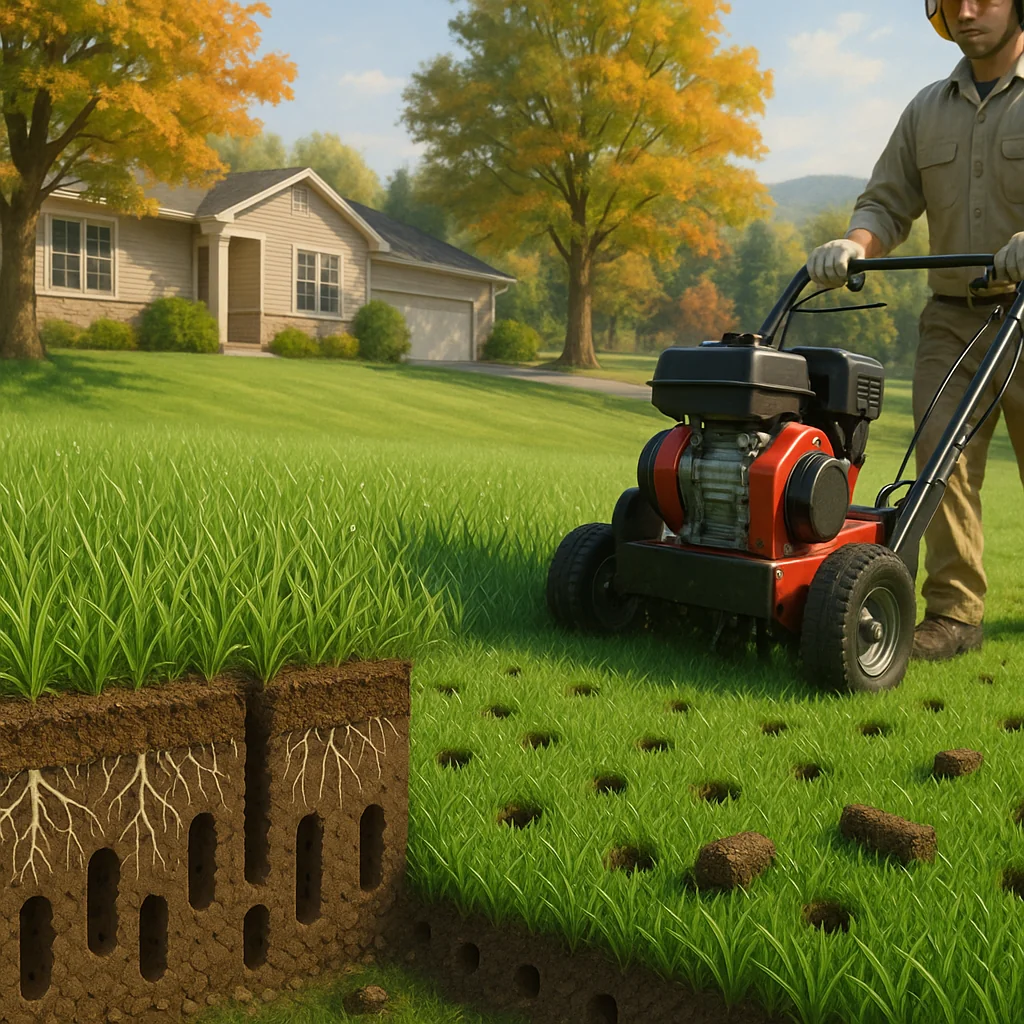
Why Regular Lawn Aeration Matters in Clarks Summit Pennsylvania
Regular lawn aeration matters in Clarks Summit because the area’s compacted soils seasonal moisture and variable weather can make it hard for grass roots to get the air water and nutrients they need. When a lawn is aerated properly the soil opens up allowing deeper root growth better drainage and stronger turf that can better handle summer stress winter recovery and everyday foot traffic.
Understanding Lawn Aeration
Lawn aeration is the process of creating small openings in the soil so air water and nutrients can move more freely into the root zone. In most residential lawns this is done with core aeration which removes small plugs of soil from the ground rather than simply poking holes. That method is especially useful in Pennsylvania because it relieves compaction instead of temporarily shifting soil aside.
Compaction happens gradually. Mowing walking playing pets and even rainfall can press soil particles together over time. In established neighborhoods around Clarks Summit lawns often develop dense soil from years of use which limits root expansion and weakens turf. Aeration helps reverse that pattern and gives grass a better environment to grow.
Why Clarks Summit Lawns Benefit So Much
Local lawn conditions play a major role in why aeration is so valuable. In Clarks Summit and nearby communities such as Clarks Green and Waverly many properties have mature landscapes shaded areas and established turf that can struggle with compacted soil. Add in Pennsylvania clay pockets sloped yards and periods of heavy rain and the soil can become dense quickly.
When soil compacts grass roots stay shallow. Shallow roots are less resilient during dry spells and more likely to thin out under heat stress. Aeration gives roots room to stretch downward which improves drought tolerance and overall lawn strength. For homeowners who want a healthier yard without overcomplicating the process aeration is one of the most effective maintenance steps available.
Key Benefits of Regular Aeration
1. Better Root Development
Healthy turf starts below the surface. Aeration allows roots to move deeper into the soil where moisture lasts longer and temperatures stay more stable. Stronger roots mean the lawn can recover faster from stress and maintain a fuller appearance through the season.
2. Improved Water Absorption
Compacted soil often causes water to run off instead of soaking in. This can leave dry spots even after rainfall or irrigation. Aeration creates pathways that help water penetrate more efficiently which is especially useful on slopes or heavier soils common in the region.
3. More Effective Fertilizer Use
Fertilizer works best when nutrients can reach the root zone. If the soil is dense nutrients may remain near the surface and provide limited benefit. Aeration improves nutrient movement so fertilization is more efficient and the lawn responds better to care.
4. Reduced Thatch Problems
Thatch is the layer of dead grass stems and organic material that builds up between the soil and living turf. A thin layer can be normal but too much thatch blocks airflow and water movement. Aeration helps break up the conditions that allow excessive thatch to persist.
5. Stronger Seasonal Recovery
After a harsh winter or a hot dry summer lawns need support to bounce back. Aeration helps turf recover by improving the soil environment and encouraging new growth. That makes it especially useful in areas like Chinchilla and North Abington Township where weather swings can be tough on grass.
Signs Your Lawn Needs Aeration
Not every lawn shows the same symptoms but several signs point to compacted soil.
- Water pools on the surface after rain or irrigation
- Grass looks thin or patchy in high traffic areas
- The soil feels hard when you push a screwdriver or stake into it
- Grass grows slowly even with regular watering and feeding
- Moss or weeds appear in places where turf should be dense
- Thatch seems thick and springy underfoot
If one or more of these issues sounds familiar aeration can be a smart next step. It is not just for damaged lawns either. Many healthy lawns benefit from routine aeration as a preventive measure.
When to Aerate in Northeastern Pennsylvania
Timing matters. In Clarks Summit the best time for cool season grasses is usually early fall though spring aeration can also be useful in some cases. Fall is often preferred because temperatures are moderate weed pressure is lower and grass can put energy into root development before winter. Spring aeration may help lawns that were heavily compacted over winter or need help recovering from salt stress and snow damage.
Because local conditions vary it helps to look at soil moisture weather patterns and lawn use. Aerating when the ground is too dry can make the process less effective while aerating when the soil is too wet can cause smearing and damage. The goal is a balanced soil condition that allows clean plug removal and good recovery.
How Aeration Fits Into a Complete Lawn Care Plan
Aeration works best when it is part of a larger lawn service strategy. It complements fertilization overseeding mowing and edging by improving the soil foundation underneath everything else. For example routine mowing at the right height keeps turf healthier while aeration helps the roots support that growth. Pairing aeration with professional lawn edging and trimming also helps create a cleaner finished look that enhances curb appeal throughout the season.
Lawns in established neighborhoods often need a combination of services to stay balanced. Thin borders around walks driveways and garden beds can make even a healthy lawn look less polished. Proper edging improves appearance while aeration improves the turf itself. Together they support both function and presentation.
What to Expect After Aeration
After aeration the lawn may look slightly messy at first because of the soil plugs left on the surface. That is normal. The plugs usually break down within a few weeks and return nutrients back into the soil. If overseeding is part of the plan the openings created by aeration help seed make better contact with the soil which improves germination.
Homeowners should avoid heavy foot traffic right after aeration and should follow watering guidance carefully. The lawn typically responds with gradual improvement rather than instant transformation. Over time the benefits become more visible through better color thicker turf and stronger growth.
Common Mistakes to Avoid
Even a beneficial service like aeration can fall short if it is done at the wrong time or under the wrong conditions.
- Aerating too frequently without a clear need
- Using spike aeration instead of core aeration on compacted soil
- Ignoring thatch buildup or poor mowing habits
- Skipping overseeding when thin turf needs help
- Not watering properly after the service
Another common mistake is assuming all lawns need the same schedule. Soil type shade drainage and usage patterns vary from property to property. A hillside lawn in one part of town may behave very differently than a shaded backyard in another.
Local Lawn Care Tips for Clarks Summit Homeowners
Because many yards in the area have established trees older turf and changing sunlight patterns it helps to manage the lawn with local conditions in mind.
- Mow at a slightly higher setting during hot dry periods to reduce stress
- Avoid heavy watering that encourages shallow roots
- Keep leaves and debris from smothering turf in the fall
- Watch for compacted areas near driveways walkways and play spaces
- Schedule aeration before adding seed so the lawn can take full advantage of improved soil contact
For properties with more demanding terrain or inconsistent turf density a regular service plan can make maintenance easier. The right combination of mowing feeding aeration and detail work can help lawns remain thick and attractive through changing seasons.
Why Professional Aeration Makes a Difference
Although aeration can be attempted with rental equipment professional service often produces more consistent results. Equipment setup soil moisture timing and pass coverage all affect the outcome. An experienced lawn care provider can identify when conditions are best and ensure the work is done evenly across the property.
For homeowners who value reliability and long term turf health professional service is often the most practical option. It reduces guesswork and supports better results especially on lawns with visible compaction drainage issues or uneven growth.
Frequently Asked Questions About Lawn Aeration
| Question | Short Answer |
|---|---|
| How often should a lawn be aerated? | Most lawns benefit from aeration once a year but heavily compacted lawns may need it more often. |
| Can aeration help with bare spots? | Yes especially when paired with overseeding because it improves seed to soil contact. |
| Is fall better than spring? | For cool season grass in Clarks Summit fall is often the best time but spring can also help in specific situations. |
| Will aeration hurt the lawn? | Core aeration may temporarily disturb the surface but it supports healthier turf in the long run. |
Final Thoughts
Regular lawn aeration matters in Clarks Summit because it addresses one of the biggest hidden problems in turf care compacted soil. By improving air water and nutrient movement aeration helps lawns grow deeper roots recover faster and stay healthier through the ups and downs of northeastern Pennsylvania weather. Whether a property is dealing with heavy foot traffic patchiness drainage issues or simply aging soil aeration is a practical step that supports long term lawn performance.
When paired with a thoughtful lawn service routine aeration can make a visible difference in turf density strength and seasonal resilience. For homeowners across Clarks Summit and nearby communities it remains one of the most important maintenance steps for a lawn that looks better and functions better year after year.
Leave a Reply